The 5G Metro project is built around an innovative hybrid private 5G network deployed at the IMREDD campus of Université Côte d’Azur. While the infrastructure itself is a technological breakthrough, its value ultimately depends on the services it enables and the people it benefits.
One of the first applications explored within the project is telepresence for students who are temporarily or permanently unable to attend university because of health conditions or disabilities. Turning this technological capability into a meaningful educational service requires much more than engineering expertise. It requires a deep understanding of students’ needs and the realities of inclusive higher education.
This is where disability support services play a central role.
From infrastructure to meaningful use cases
The deployment of a hybrid private 5G network opens the door to a wide range of innovative campus services requiring reliable, secure and low-latency connectivity.
Rather than assuming which applications would bring the greatest value, the project seeks to identify use cases that address genuine challenges faced by the university community. Supporting students who cannot always be physically present quickly emerged as one of the most promising opportunities.
Disability support professionals help bridge the gap between technological possibilities and educational realities. Their expertise ensures that the project focuses on real needs rather than technology for its own sake.
Building use cases together
To guide this work, 5G Metro is establishing a use-case steering group bringing together teachers, students and disability support staff. This multidisciplinary group will identify situations in which telepresence can provide genuine added value, assess the educational and organisational implications of each use case, and help shape future experimentation. The objective is to ensure that every technological development is driven by educational value and practical relevance.
Looking beyond accessibility
Making a lecture accessible is only part of the challenge. Students who cannot attend campus regularly often experience reduced interaction with teachers, fewer opportunities to collaborate with classmates and a growing sense of isolation. These factors can affect engagement, motivation and ultimately academic success.
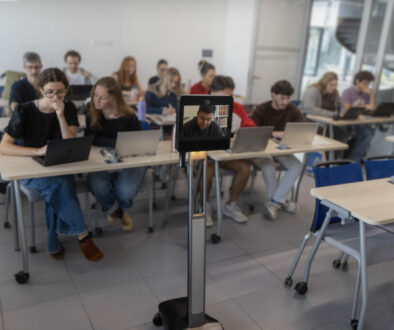
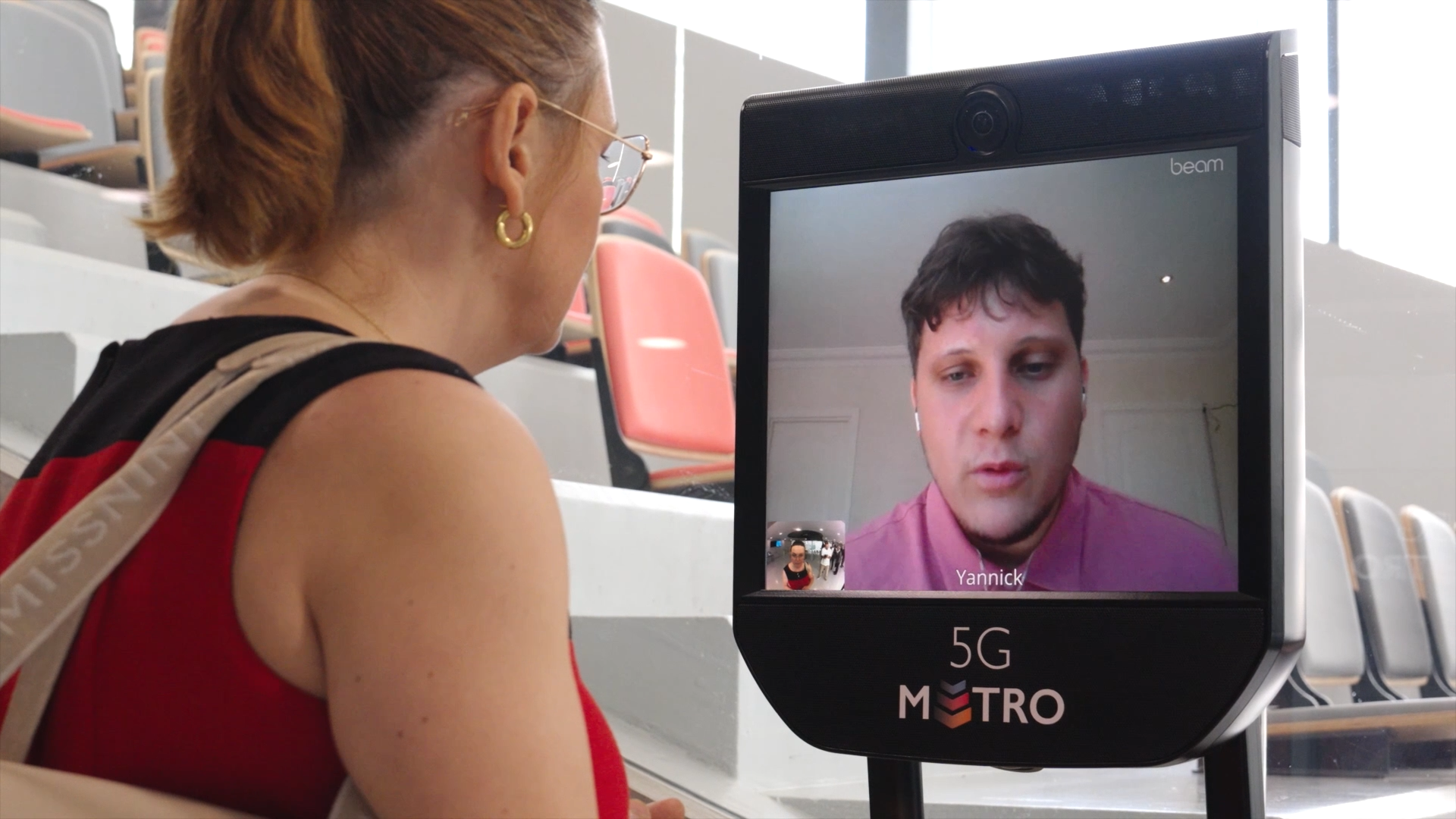
Telepresence offers the possibility not only to attend classes remotely, but also to remain part of everyday university life. By allowing students to move around campus, meet classmates, participate in informal conversations and interact naturally with teachers, it helps preserve the social dimension of higher education.
Disability support services are essential in evaluating how these new possibilities can complement existing support measures while respecting each student’s individual situation.
Student testimony
Hear Yannick’s experience with telepresence and his perspective on its potential to make university life more inclusive.