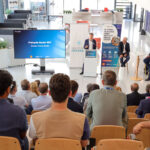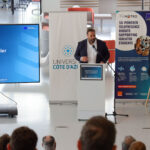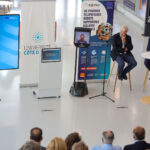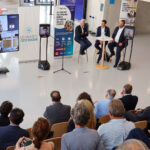
The 5G Metro project has reached a major milestone with the official inauguration of its hybrid private 5G network at IMREDD – Université Côte d’Azur in Nice, France.
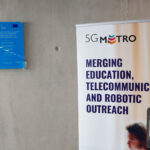
Co-funded by the European Union and developed by a consortium bringing together Université Côte d’Azur, Orange and Awabot, 5G Metro explores how advanced connectivity and telepresence robotics can support more inclusive, accessible and innovative learning environments.
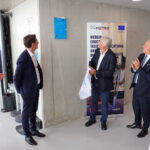
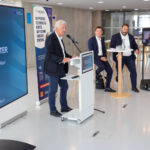
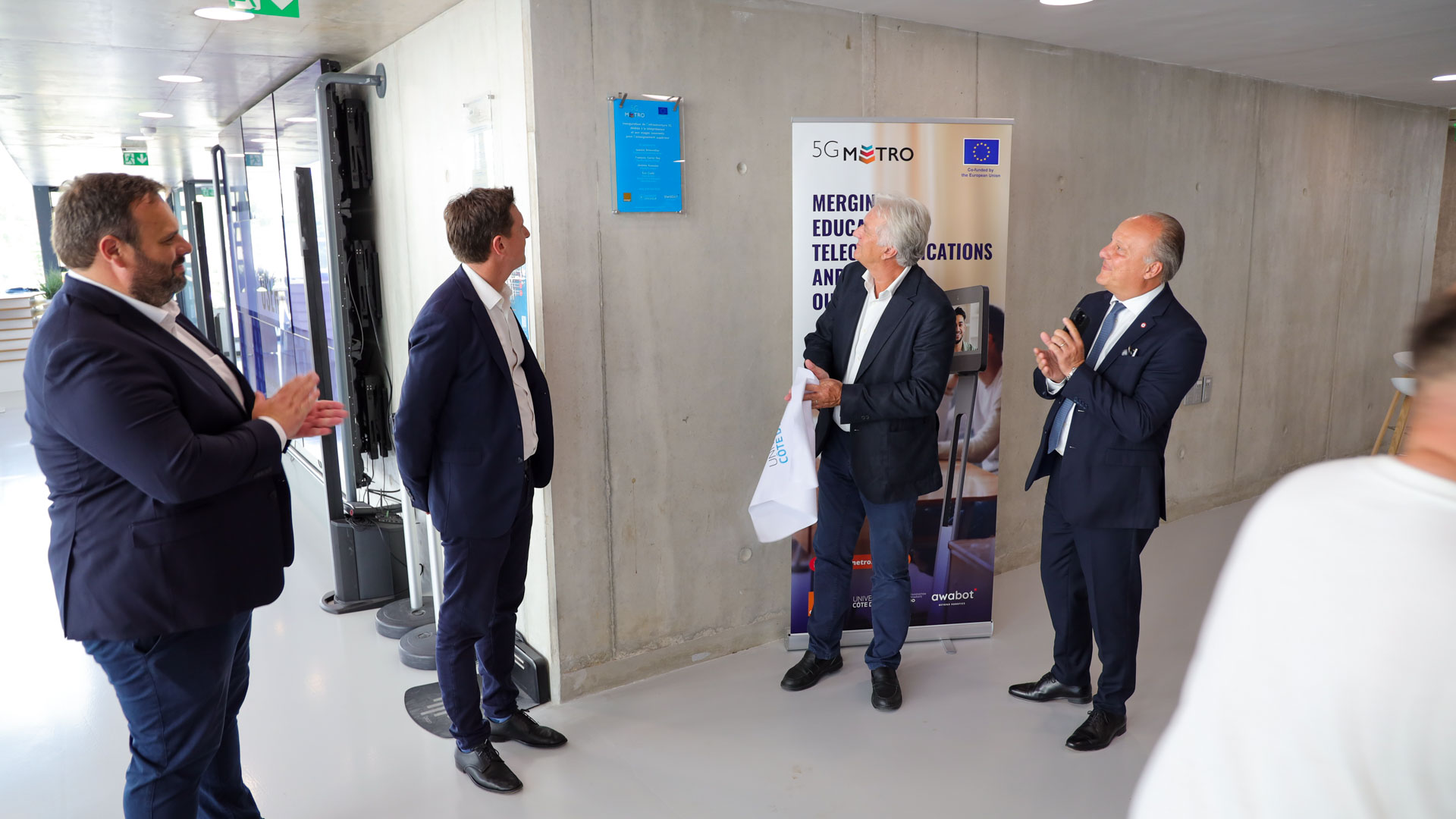
The inauguration ceremony was attended by Jeanick Brisswalter, President of Université Côte d’Azur, François-Xavier Rey, Director of Orange South-East, Jérémie Koessler, President of Awabot, and Bernard Chaix, Municipal Councillor representing Éric Ciotti, Mayor of Nice and President of the Nice Côte d’Azur Metropolis.
Advancing Inclusive Education Through Connectivity
At the heart of 5G Metro lies a simple ambition: enabling students who are unable to attend classes in person due to hospitalization, disability or other circumstances to remain fully connected to academic and campus life.
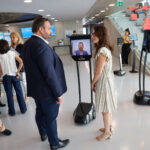
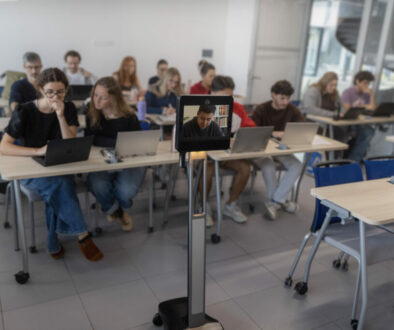
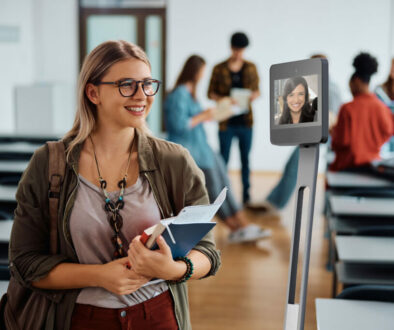
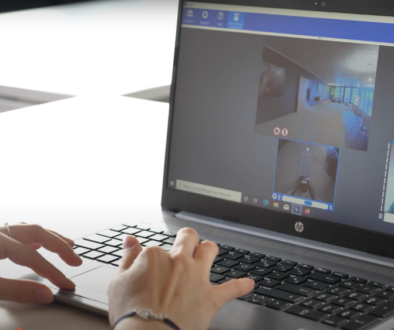
To achieve this, the project combines telepresence robotics with a hybrid private 5G network. Unlike traditional videoconferencing solutions, telepresence robots allow remote users to move through classrooms and university buildings, interact naturally with lecturers and fellow students, and participate more actively in the educational experience.
A key message emerged during the inauguration: the quality of connectivity directly determines the quality of inclusion. When technology becomes seamless and invisible, a student unable to attend in person can simply become a student like any other.
A First in France
The infrastructure deployed at IMREDD is based on a Hybrid Private Mobile Network (MPNH), combining the advantages of public and private mobile networks within a single architecture.
This approach provides the reliability, security and low-latency performance required for demanding real-time applications such as telepresence robotics, while also creating opportunities for future developments involving virtual reality and other immersive technologies.
The deployment represents a first in France and a pioneering initiative for the higher education sector in Europe.
A Living Laboratory for Future Applications
Beyond its educational use cases, the 5G Metro infrastructure serves as a living laboratory for innovation and applied research.
The network provides a real-world environment for testing advanced digital services that require guaranteed connectivity, low latency and secure communications. Potential applications extend beyond education to sectors such as healthcare, smart buildings and public services.
By bringing together telecommunications, robotics and higher education, the project demonstrates how next-generation connectivity can create tangible social impact while fostering innovation across multiple domains.
Building a Replicable Model for Europe
One of the project’s key objectives is to develop a model that can be replicated by universities and public institutions across Europe.
Through its public-private partnership approach, 5G Metro demonstrates how advanced connectivity infrastructures can be deployed in real operational environments to support inclusion, innovation and research. The lessons learned from the project will contribute to future deployments in universities, public buildings and other environments requiring reliable and secure digital services.
As the project enters its next phase, further experimentation will continue with telepresence robots and other advanced applications, helping to shape the future of connected and inclusive learning environments.