Navigating indoor environments is something most of us take for granted. That is, until we find ourselves lost in a maze of corridors, unsure how to reach a specific room, floor, or service. For people using telepresence robots, the challenge is even greater. Unlike outdoor GPS systems, which rely on satellite signals, indoor navigation requires an entirely different set of tools and protocols to function effectively, especially in complex, multi-level buildings like university campuses.
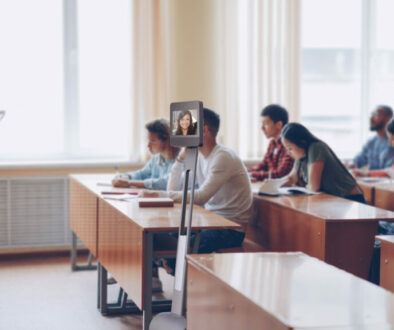
This challenge is particularly relevant in the context of the 5G Metro project. As we deploy telepresence robots to support students who cannot attend classes in person, ensuring smooth and autonomous indoor navigation becomes a key priority. It’s not enough for remote students to simply connect. They must also be able to move freely, find their classrooms, attend meetings, and interact with their environment with confidence and autonomy.
That’s where mobility research meets digital infrastructure.
Drawing on lessons from previous mobility projects led by IMREDD (notably those involving autonomous shuttles in urban settings), 5G Metro applies similar principles to indoor environments. These include:
- Spatial mapping and real-time localization, to allow the robot to understand its environment;
- Multi-sensor fusion, combining cameras, LIDAR, and inertial measurement units to ensure safe and fluid navigation;
- Vertical mobility, allowing robots to use elevators or access different floors with minimal human assistance.
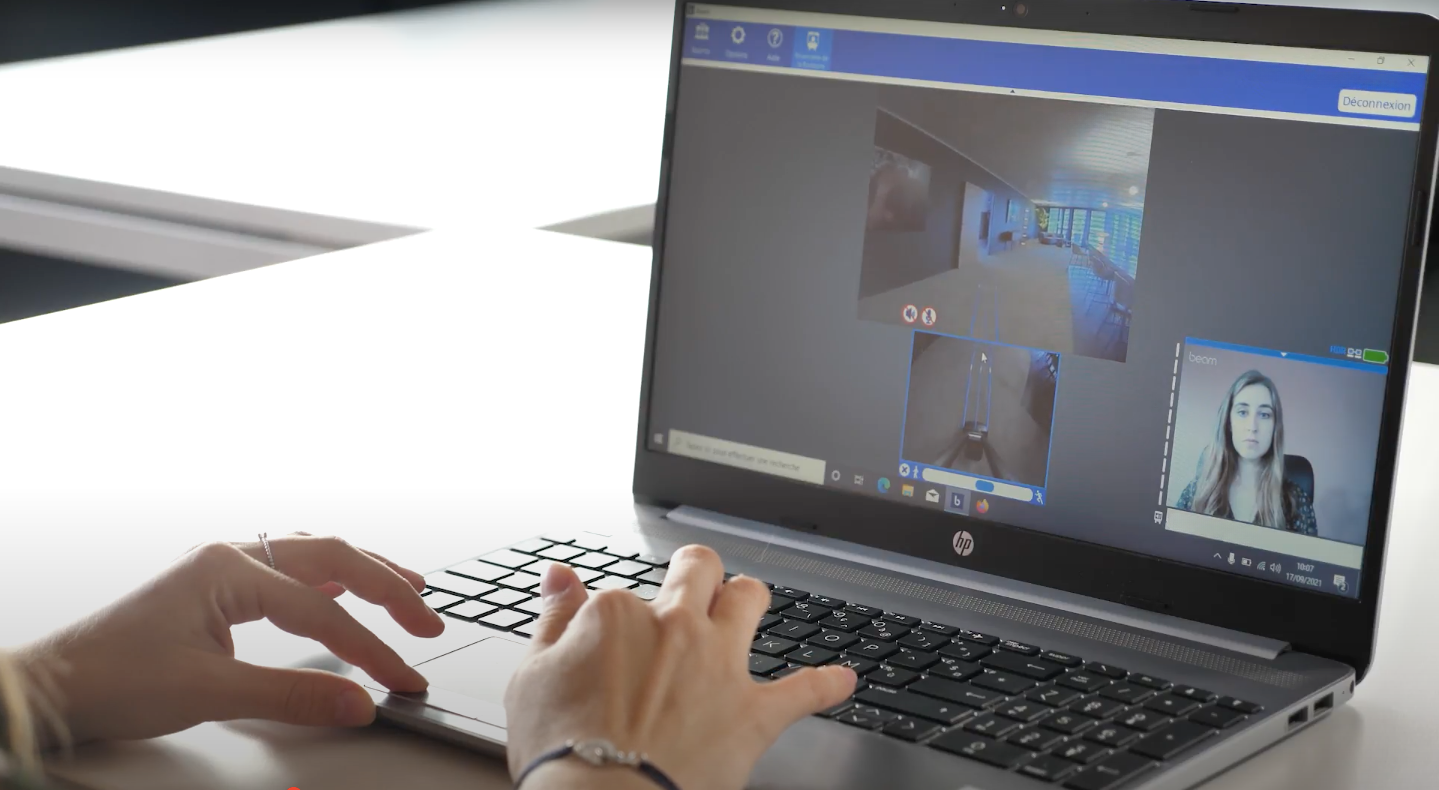
Importantly, while telepresence robots can be manually controlled by remote users, those users may not always be familiar with the building’s layout. How can a student located miles away know which way to turn, or how to reach the lecture hall on time? One solution currently being explored within 5G Metro is autonomous indoor navigation: the ability for the robot to receive a destination (such as “Room 212”) and make its way there independently, without the need for constant user input.
This autonomy could significantly improve the user experience and their feeling of immersion, especially for students who are already navigating the complexity of remote learning. It would allow them to focus on the content of their courses rather than the logistics of getting there.
The goal is not just technical. It’s about empowerment: enabling a remote student to enter a classroom by themselves, a teacher to deliver a lecture from afar, or a researcher to navigate a lab without setting foot on campus.
Indoor navigation is becoming a pillar of inclusive digital mobility. As 5G Metro continues to evolve, this component will be key in demonstrating how smart infrastructure and real-world autonomy can converge to build better-connected, more accessible academic spaces.